Robot mops on wood floors, tiles and rugs: the right settings
A robot mop does not treat an oiled wood floor, a tile grout line and a long-pile rug the same way. Here are the suction and mopping settings for each surface, so you clean better without damaging anything.
Contents
General principles
Whatever the floor, a few rules improve a robot mop’s results:
- Vacuum before mopping, or at the same time on a lightly soiled floor. Mopping a floor covered in crumbs and hair turns the dirt into sludge.
- Measure the water: a low flow and frequent passes are better than a soaked floor. The Qrevo Edge 2 offers 30 water-flow levels according to PCWorld.
- Set the floor type for each room in the app if automatic detection gets it wrong.
- Draw no-mop zones around rugs you do not want to get damp.
- Use a compatible detergent, in small amounts, and never a foaming product, bleach or vinegar in the dock.
The Qrevo Edge 2’s dock has no detergent tank: you add the product by hand to the clean water. Stick to the stated dose, because too much leaves a sticky film that attracts dust and can make the dirty water foam.
The robot also adapts its behaviour: it increases suction on rugs and lifts its mops. On the Qrevo Edge 2, the lift reaches 12 mm, and the robot can leave its mops at the dock before vacuuming a thick rug, according to the Maniaques test. After mopping, it quickly removes residual water so the floor dries fast, a point Roborock highlights for wooden floors.
Wood floors
Wood is the floor that needs the most care, because it does not like standing water. It all depends on its finish.
Lacquered wood
The lacquer forms a barrier. A robot mop can clean it without any problem using a low water flow, provided the dock wrings the mops out well and the floor dries within a few minutes.
Oiled or waxed wood
Oil and wax protect the wood by soaking into its fibres, but they do not cope well with repeated moisture and some detergents. Check the flooring instructions: often, it is better to set these rooms to vacuum only and keep mopping for manual cleaning with a suitable product.
Old wood floors
Gapped boards let water seep in. Prefer vacuuming only, following the direction of the boards where dust collects.
In every case, look at the floor after the first session: marks or boards that stay damp for several minutes mean the flow is too high. Lower it, or switch the room to vacuum only. A clean, dry wood floor is better than one mopped every day that turns grey over the months.
The right reflex: do a first mopping test at the lowest flow in a discreet room and check that the floor dries within a few minutes, without marks.
Tiles and grout
Tiles are ideal territory for a robot mop. They tolerate water, clean quickly and are not scratched by the mops. Grout lines are the weak point: they hold on to fine dust and dirt.
- Water flow: medium in living areas, higher in the kitchen and hallway.
- Passes: a double, even cross, pass in the kitchen to deal with grout lines in both directions.
- Stains: the robot maintains well, but dried coffee or sauce stains often need several passes, as PCWorld and Maniaques observed. Deal with them quickly, or by hand.
- Bathroom: wait until the floor is dry after a shower; hair on the floor is handled well by an anti-tangle brush.
Large-format tiles with thin grout lines are the easiest to clean; small tiles and deep or textured grout need a slower pass and a slightly higher flow.
Vinyl, lino and laminate
Vinyl and lino tolerate water well and can be mopped like tiles, with a low to medium flow. Laminate needs more care: water that seeps into the joints can make the boards swell. Set a low flow and check that the floor dries quickly. If in doubt, the flooring manufacturer’s instructions take priority.
Natural stone and polished concrete
Natural stone, such as travertine, slate or terracotta tiles, often has an uneven surface that traps dust in its hollows. It tolerates water but not every detergent: acidic products attack limestone. Use plain water or a compatible product, with a medium flow. Polished concrete, protected by a sealant or wax, is treated like lacquered or waxed wood depending on its finish.
Cork, bamboo and underfloor heating
Cork floors are usually sealed with a varnish and behave much like lacquered wood: vacuuming every day is fine, and light mopping with a low flow works as long as the floor dries quickly. Unsealed or waxed cork should be vacuumed only. Engineered bamboo is similar: follow the manufacturer’s advice and keep the water to a minimum.
Underfloor heating is not a problem for the robot itself, but it changes how floors react. A warm floor dries faster, which suits wood and laminate, and the dust it lifts into the air settles again quickly, so a daily vacuuming pass is useful in winter. Avoid running a mopping session just as the heating comes on after a long pause: large temperature changes combined with moisture are hard on wooden boards. If your dock stands on a heated floor, check that the manual allows it.
Low-pile rugs and thin carpet
Rug fibres hold dust deep down. It is the main brush that loosens it; suction only carries it away. On a low-pile rug or thin carpet, a good robot does an excellent maintenance job: Vacuum Wars measured 94% of sand removed from a carpet by the Qrevo Edge 2, against an average of 78%.
- Suction: let the robot increase it automatically on rugs.
- Mopping: the mops lift by 12 mm; if the rug is very thin and you are worried about moisture, draw a no-mop zone.
- Frequency: a daily pass in high-traffic areas stops dust from getting ground in.
Thick and long-pile rugs
Shaggy, Berber and long-pile rugs are the hardest. Dust sinks in and the pile can slow the brush or trap the wheels.
- Mops: the Qrevo Edge 2 can leave them at the dock before vacuuming a thick rug; Maniaques saw it finish its cycle on a rug about 2.3 cm thick.
- Fringes: they wrap around the brushes. Tuck them under the rug or draw a no-go zone along the edge. PCWorld recommends a no-go zone for very long-pile or fringed rugs.
- The edge of the rug: a thick rug forms a step; beyond about 2 cm, the robot can get stuck.
- Back-up: a pass with a stick or cylinder vacuum from time to time goes deeper.
Thresholds and transitions
Door sills, the edges of thick rugs and differences in level between rooms are the main reason robots get stuck. The Qrevo Edge 2 climbs about 20 mm according to PCWorld and Vacuum Wars, 2.5 cm according to Maniaques, and a 3 cm obstacle stops it.
- Measure your thresholds before buying.
- Beyond the robot’s capacity, fit a small ramp or create a separate map for that area.
- Declare the thresholds in the app if it allows you to.
- Check thick bath mats and doormats, which are often higher than you think.
Room by room
The kitchen
Crumbs, grease and splashes: set a double pass, a higher flow and a daily session. The Qrevo Edge 2’s dock washes the mops in hot water up to 80 °C, which helps dissolve grease. The FlexiArm brush deals with the foot of the low units, where Maniaques found good dust pick-up.
The hallway
Sand and grit brought in on shoes scratch floors. A daily vacuuming pass and an absorbent doormat limit the damage.
The living room
Wood floors, rugs and low furniture: let the robot go under the sofa, provided there is enough height, and draw a no-go zone around the TV cables.
The bedrooms
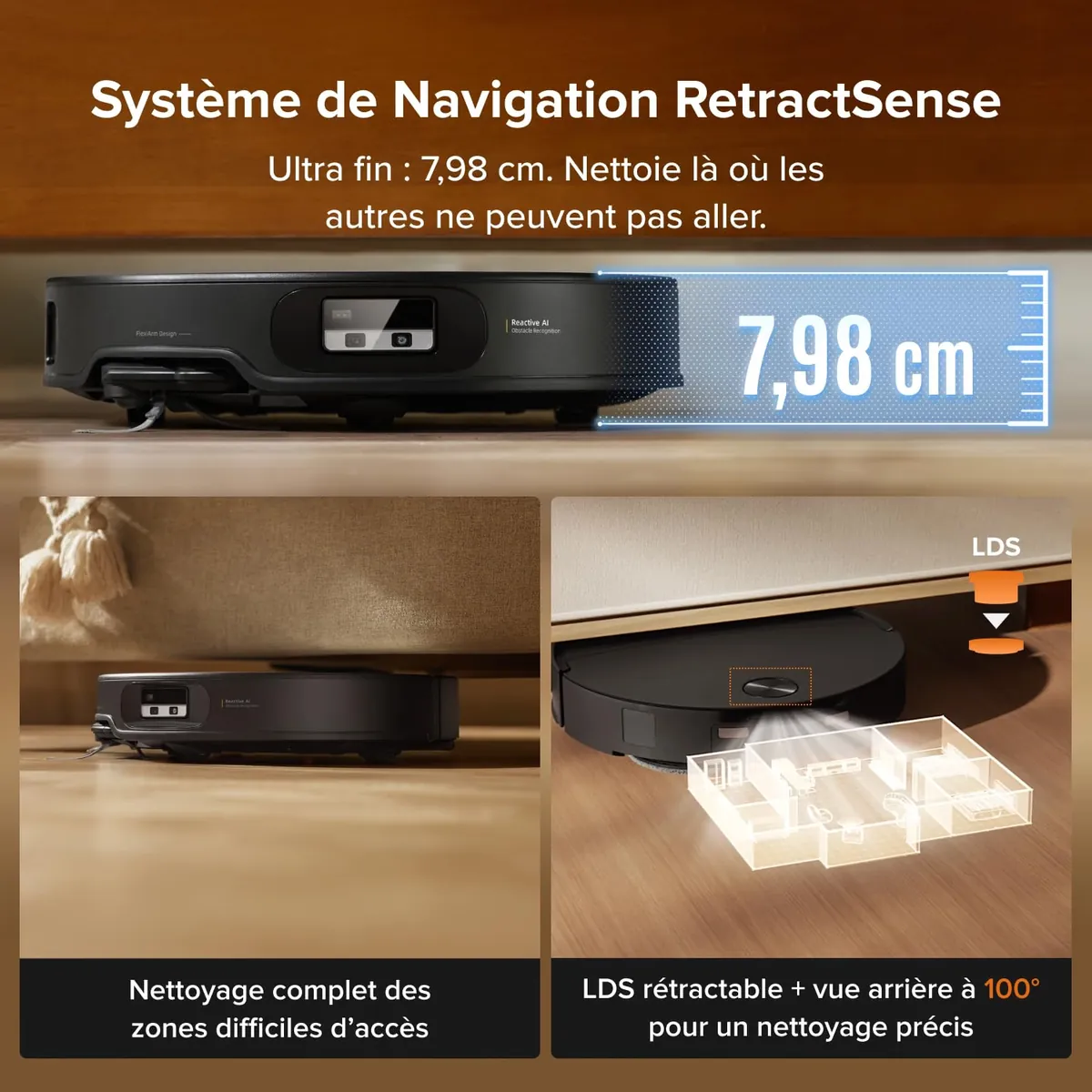
Little dirt but lots of fine dust under the beds: a pass every other day is often enough. A slim robot like the Qrevo Edge 2, at 7.98 cm, reaches under low beds.
The bathroom
Hair and limescale marks: mop on a dry floor, with a compatible detergent if needed, and draw a no-go zone around a thick bath mat.
Corridors and landings
Narrow high-traffic areas, often tiled or laminate, collect dust and shoe marks. A daily vacuuming pass and light mopping twice a week are enough. If a corridor leads to a bedroom over a slightly high threshold, check that the robot climbs it without hesitation.
How often to clean
The right rhythm depends on footfall, pets and allergies. As a benchmark: daily vacuuming of the living areas, kitchen and hallway; mopping hard floors two to three times a week; bedrooms every other day. With a pet or someone with allergies, increase the frequency.
Regularity matters more than intensity. A short, frequent pass stops dust from getting ground in and makes each session quicker. The Qrevo Edge 2’s SmartPlan 3.0 mode adapts its strategy room by room: boosted suction in high-traffic areas, optimised cleaning order.
Which robot for your home?
Answer a few questions: we suggest the most suitable type of robot and estimate your cleaning time, compared with the maximum runtime claimed for the Qrevo Edge 2.
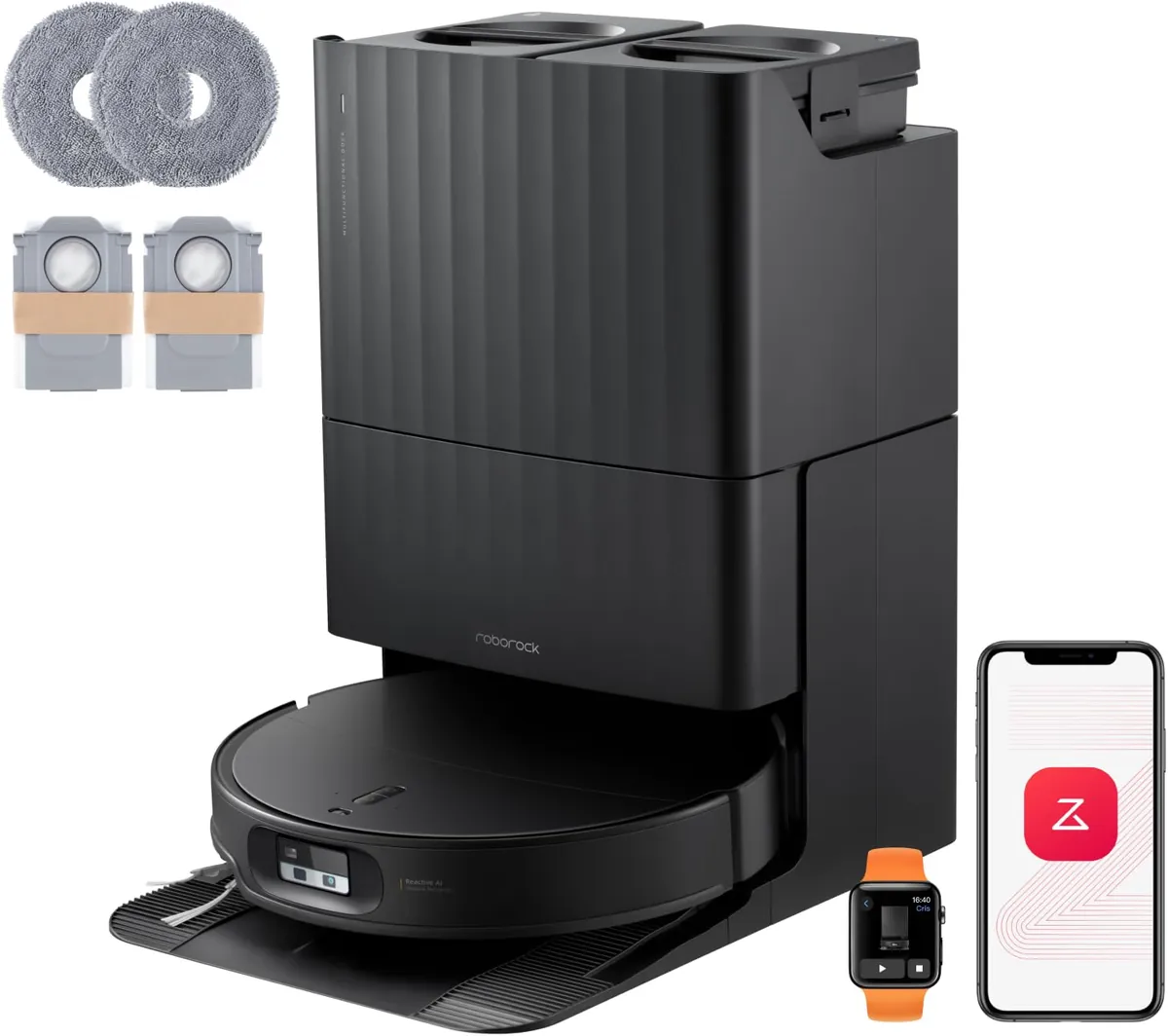
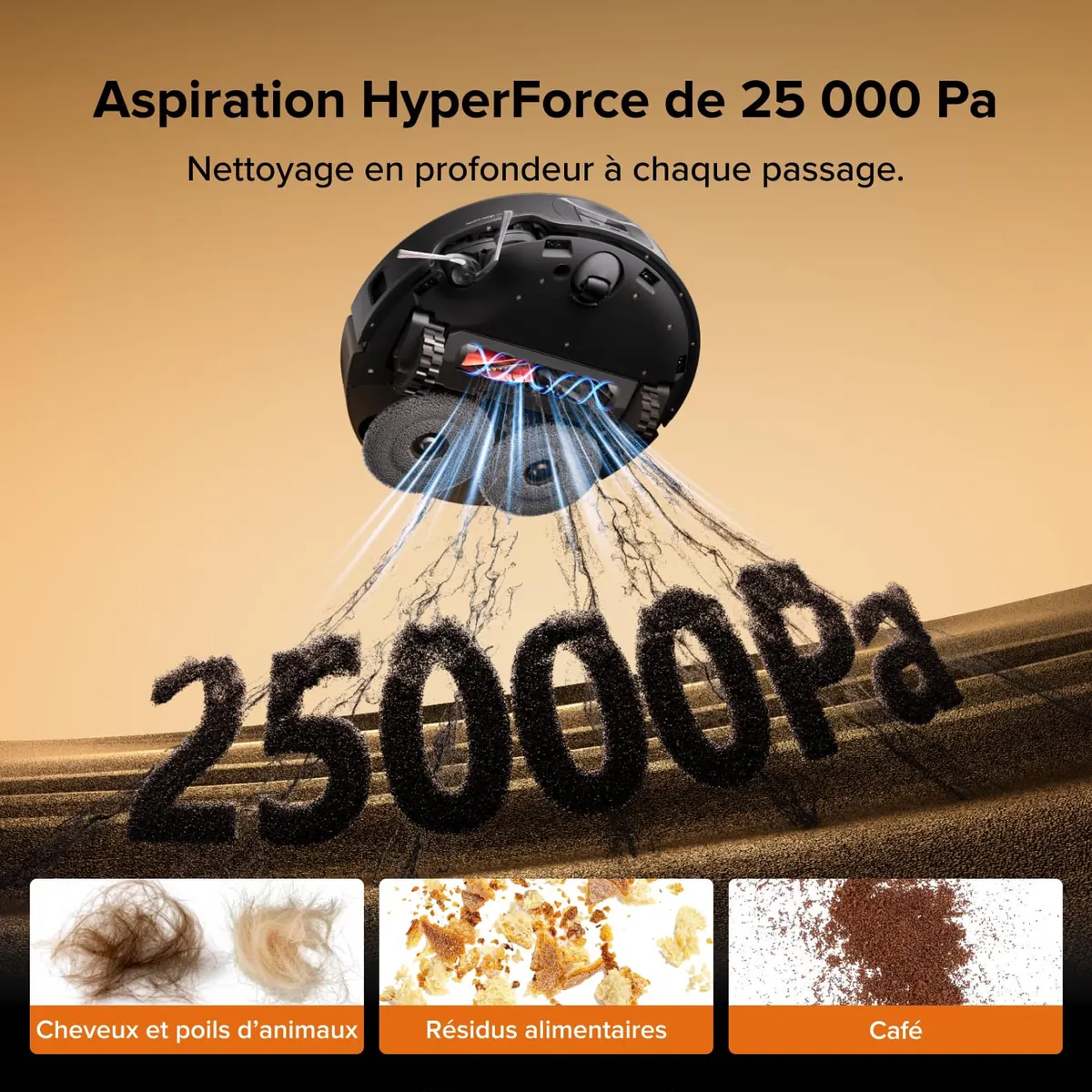
25,000 Pa, 7.98 cm to slip under furniture, a FlexiArm brush for the edges and a dock that washes at 80 °C and dries at 55 °C: enough to forget about the mop and bucket.
- 25,000 Pa
- 7.98 cm
- 80 °C wash
Summary table
| Floor | Suction | Mopping | Key point |
|---|---|---|---|
| Lacquered wood | Normal | Low flow | Floor dry within a few minutes |
| Oiled or waxed wood | Normal | Vacuum only or minimum flow | Check the flooring instructions |
| Tiles | Normal | Medium flow, double pass in the kitchen | Grout holds on to dirt |
| Vinyl, lino | Normal | Low to medium flow | Few constraints |
| Laminate | Normal | Low flow | Keep water out of the joints |
| Natural stone | Normal | Medium flow, no acidic product | Uneven surface |
| Low-pile rugs | Boosted | Mops lifted | Daily pass |
| Thick rugs | Boosted | Mops left at the dock | Watch fringes and height |
Mistakes to avoid
- Mopping an oiled wood floor without checking the flooring instructions.
- Setting the water flow too high: marks, waterlogged grout and damaged wood.
- Pouring an unsuitable product into the dock: foam, smells and clogged pumps.
- Leaving fringes within reach of the brushes.
- Forgetting the thresholds: a stuck robot no longer cleans the rest of the home.
- Counting on the robot to scrub: it maintains, it does not strip.
For looking after the brushes and mops, see our guide to robot mop maintenance, and our user guide for step-by-step settings.
Frequently asked questions
Does a robot mop damage wood floors?
Lacquered wood copes well with mopping using little water. Oiled, waxed or old wood floors call for caution: check the instructions and prefer vacuuming only if needed.
What water flow on tiles?
A medium flow in living areas and higher in the kitchen, with a double pass for the grout.
Does the robot mop rugs?
No. It lifts its mops on rugs and can leave them at the dock before vacuuming a thick rug.
How do you stop the robot getting a thin rug wet?
Draw a no-mop zone around the rug in the app.
Which product should you use in the dock?
A compatible detergent recommended by the manufacturer, in small amounts. Avoid bleach, vinegar and foaming products.
Does the robot go over a bath mat?
A thick bath mat often forms a step and soaks up water: it is better to lift it or draw a no-go zone.
Can the robot clean polished concrete?
Yes, by treating it like lacquered or waxed wood depending on its finish, with a low flow and a suitable product.
Do you need a double pass in the kitchen?
It is recommended: crumbs and grease build up more there than elsewhere, and grout holds on to dirt.
How can you tell whether a wood floor is lacquered or oiled?
Lacquered wood looks shinier and a drop of water beads on it; oiled wood is more matt and slowly absorbs the drop. If in doubt, ask the fitter or check the installation instructions.
The robot leaves streaks on my tiles: what should I do?
Lower the water flow, reduce or remove the detergent, and check the condition of the mops. Worn or poorly rinsed mops leave streaks; the Qrevo Edge 2’s dock washes them in hot water, but they eventually wear out.
Clean floors, without thinking about it.
25,000 Pa · 7.98 cm · 80 °C wash · 55 °C drying · over 280 object types recognised. The price changes often on Amazon: check it, along with the seller, the exact version (Set, X, Pro) and the accessories included, before you order.
Check the price on AmazonAffiliate link · new tab